AI Engineer Shanghai 2026, Day 2: From Context Engineering to Physical AI
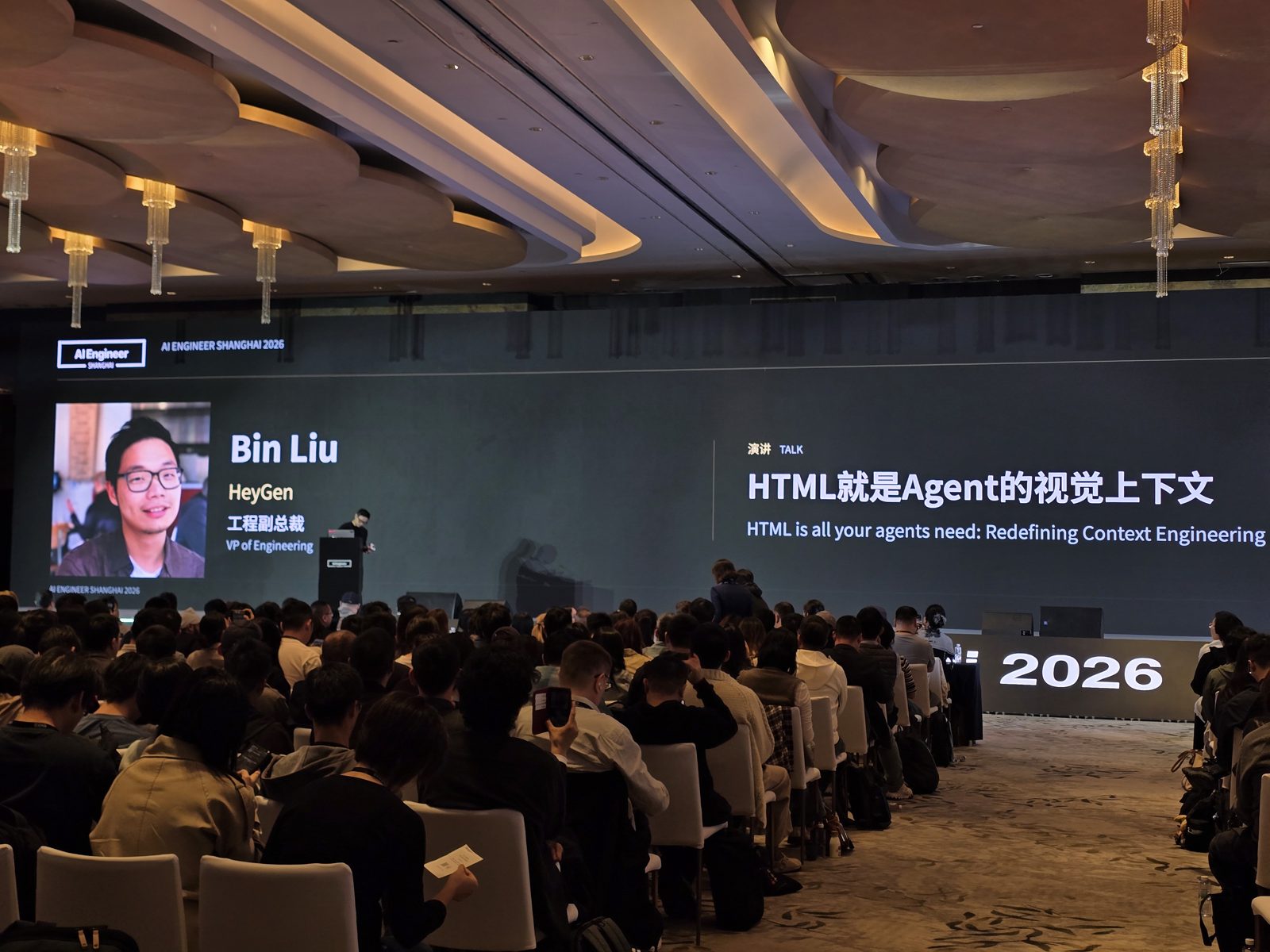
Overview Day 2 of AI Engineer Shanghai 2026 was on November 6, again at the Hilton Shanghai Hongqiao and again on one main stage. The theme on the program was world models, physical AI and AI-native products. My notes from Day 1 are in the Day 1 post. The morning was about what goes into a model and how to check what comes out. Christoph Lassner, a co-founder of World Labs, opened with a taxonomy of world models. HeyGen argued that HTML is better context than JSON for video agents. Chiling’s founder said the only moat left for vertical AI is expert knowledge you encode yourself, and HICAP said the last mile in a factory is data that no system exposes through an API. Two talks on checking followed: Daily.co on trusting voice-agent evals in a language the author can’t read, and NUS on what 3,000 live speech-to-text sessions did to their benchmark numbers. ...
AI Engineer Shanghai 2026, Day 1: Open Models, Agents and Infrastructure
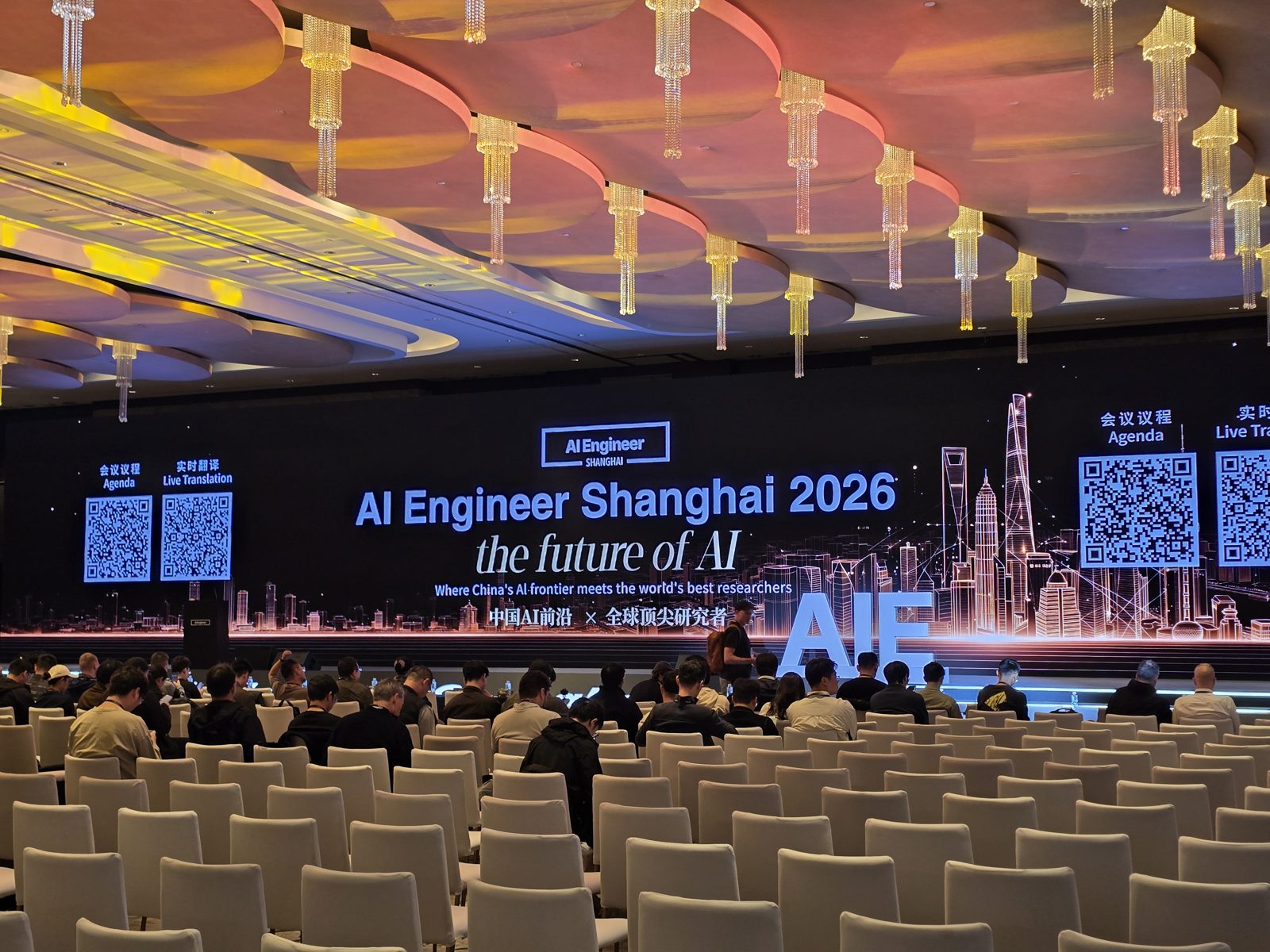
Overview AI Engineer Shanghai 2026 ran on November 5 and 6 at the Hilton Shanghai Hongqiao, the first AI Engineer event held in China. I went for Day 1, whose theme on the program was open models, agents and infrastructure. Registration (签到处) at 09:07, with the AI Engineer Shanghai backdrop and the sponsor names above it. ...
CLSF 2026 — Talks Summary
Overview China Linux System Forum (CLSF) 2026 — Chengdu, June 4–5. CLSF (started 2009) is the Chinese counterpart to LSF/MM: closed-door, invitation-only, single-track, ~50 senior kernel engineers and academic researchers (including authors of two SOSP 2025 best papers and several OSDI papers), with industrial leadership participation from Alibaba’s open-source organization and the openEuler chair. Attendees spanned Chinese internet majors (Alibaba, Ant, ByteDance, Tencent, Kuaishou, DiDi, JD, China Telecom Cloud), traditional vendors (Huawei, Kylin, Red Hat, Intel), hardware/OEMs (Transsion, LeapIO, WDC), academia (SJTU IPADS, Beihang, PKU/Asterinas), and a small international contingent (Damien Le Moal/WDC, IBM Research). ...
Using Bpftrace to Detect Deadlock in Hugetlb Subsystem
In this blog post, we’ll explore how to use Bpftrace to investigate and analyze a deadlock issue in the Linux kernel’s hugetlb subsystem. We’ll walk through the process of identifying the root cause using Bpftrace’s tracing capabilities, examining kernel function calls and variables in real-time, and finally developing a solution. Let’s get started! Bpftrace Bpftrace is a high-level tracing language with scriptable syntax support for Linux that leverages eBPF (Extended Berkeley Packet Filter) technology for powerful kernel observability. Created by Alastair Robertson and significantly advanced by Brendan Gregg, it’s inspired by awk, C, and predecessors like DTrace and SystemTap. ...